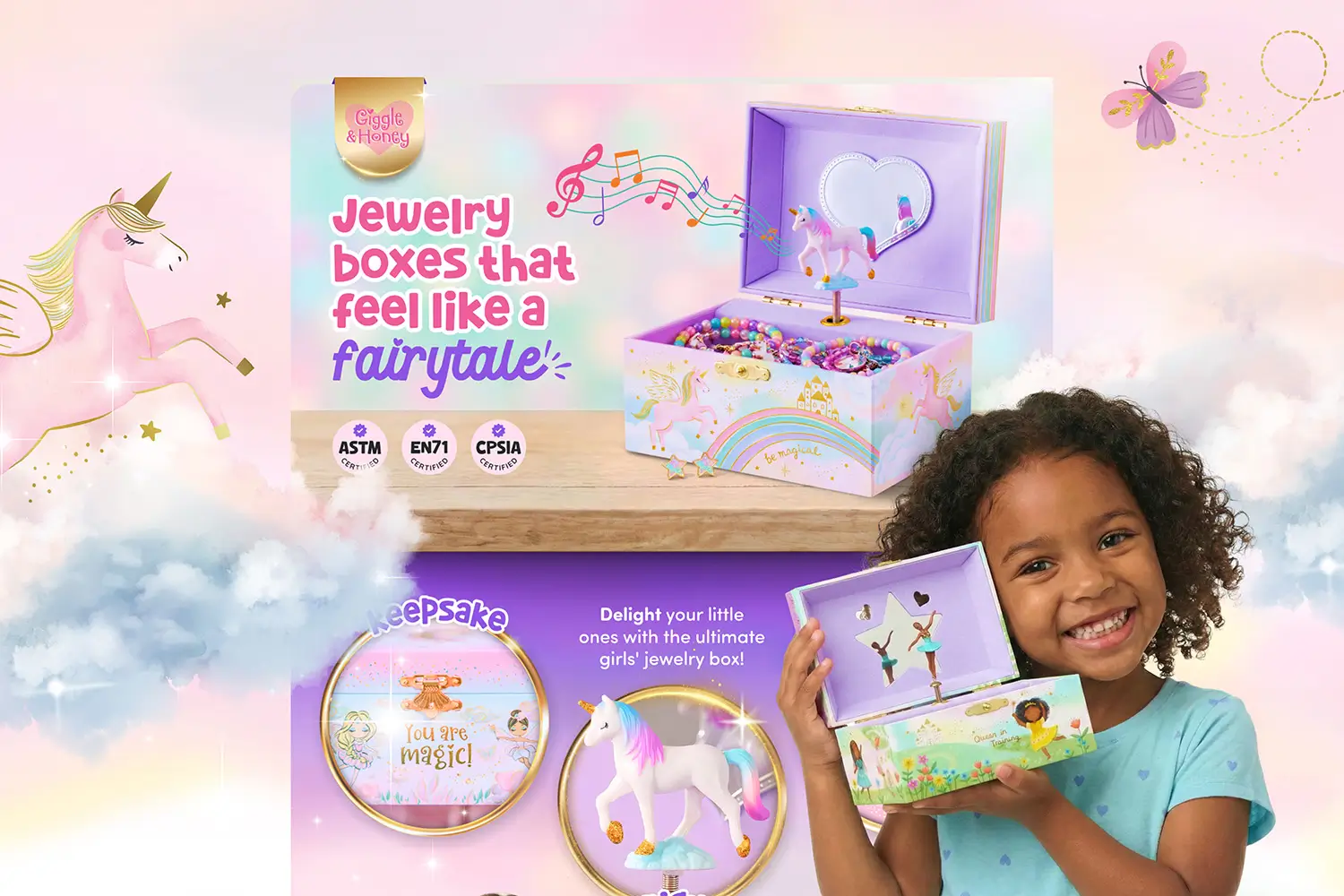




If you have been told that A+ Content is "just for conversions" and has nothing to do with your rankings, you have been getting half the story. The full answer is more nuanced, and understanding it changes how you approach every listing you build.
Here is the full picture.
What Is Amazon Premium A+ Content?
A+ Content is a free feature inside Seller Central that replaces the plain-text product description with custom layouts: enhanced images, comparison charts, and brand storytelling modules. It is available to sellers enrolled in Amazon Brand Registry.
There are two tiers:
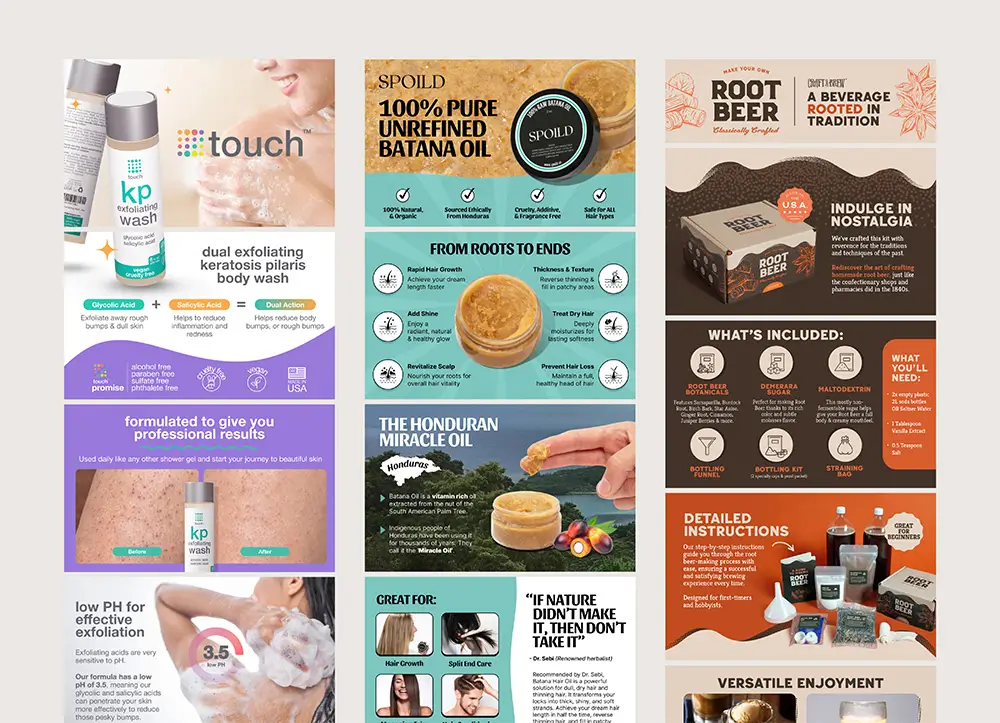
Standard A+ Content gives you up to five modules and renders on desktop only. It is available to all brand-registered sellers at no cost.
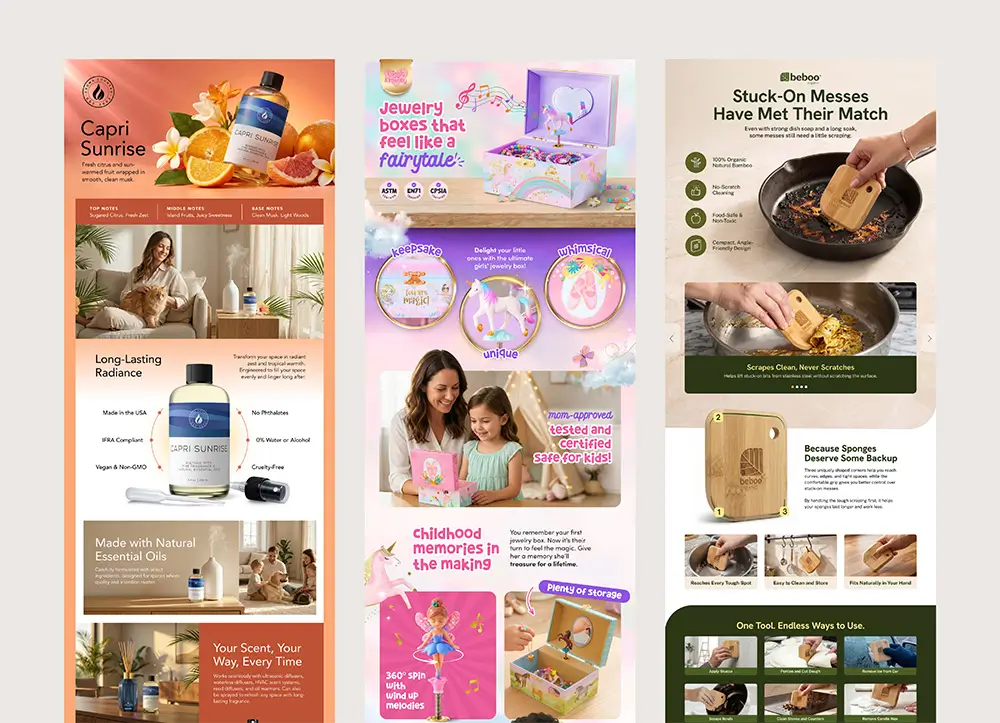
Premium A+ Content (sometimes called A++) gives you seven or more modules, full-width imagery, video embeds, interactive hotspots, carousel modules, and richer comparison charts. It renders on both desktop and mobile, with separate previews for each inside Seller Central. Amazon opened Premium A+ to third-party sellers who meet the eligibility criteria.
To qualify for Premium A+, you need:
- Active Brand Registry enrollment
- A published Brand Story across all your ASINs
- Five approved A+ modules submitted in the last 12 months
Amazon checks eligibility at the start of each month and grants access automatically. No Seller Support ticket required. Full eligibility details are on Amazon's official A+ Content page.
The conversion difference between tiers matters. Amazon reports up to an 8% average sales increase with standard A+ Content and up to 20% with Premium A+. That gap is important once you understand how conversion rate connects to ranking.
Does A+ Content Directly Rank You for Keywords?
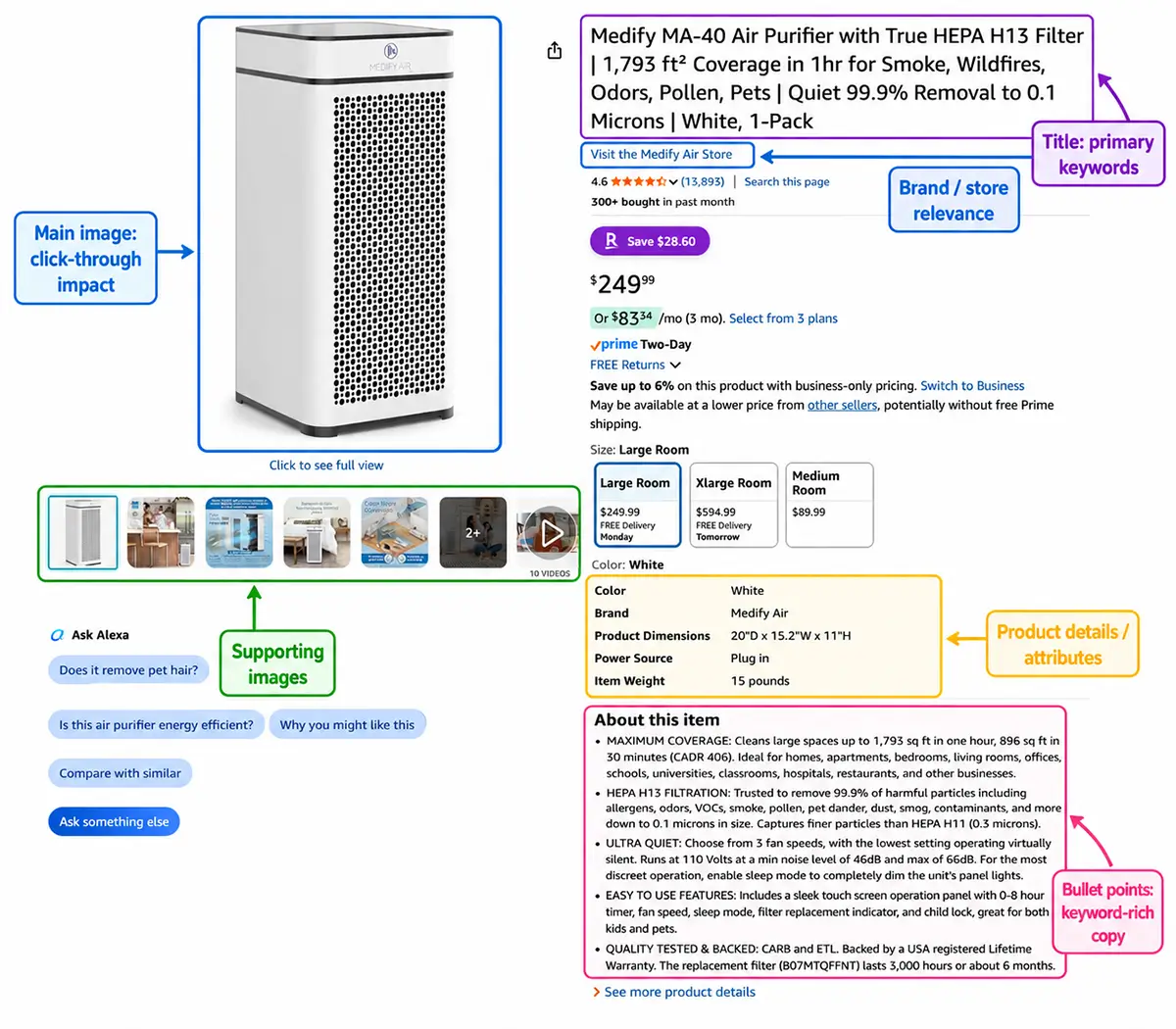
No. Amazon's algorithm indexes specific listing fields for keyword relevance: your product title, bullet points, product description, and backend search terms. A+ Content body text does not carry the same weight as those fields. If a keyword only lives in your A+ Content and nowhere else in your listing, you will not rank for it.
How A+ Content Affects Amazon Rankings (The Real Mechanism)
Amazon does not rank products in isolation. Its algorithm watches what happens after a shopper lands on your detail page. Conversion rate, sales velocity, and return rate are all inputs that shape how much visibility your listing receives. A+ Content affects all three.
Conversion Rate on Your Amazon Product Detail Page
Conversion rate appears in Seller Central as Unit Session Percentage. When it rises, Amazon reads that as a match signal between your product and the searches driving traffic to your page. The algorithm responds by increasing your visibility.
Amazon's own data backs up a 3% to 10% conversion lift for standard A+, and higher for Premium A+. That lift translates directly into a ranking improvement without increasing ad spend. It is not theoretical. It is measurable, and it compounds.
This is the part most sellers underestimate. A few percentage points of conversion improvement does not just mean more sales from your existing traffic. It tells the algorithm your listing deserves more traffic in the first place.
Sales Velocity and Amazon Listing Design
Consistent, accelerating sales tell Amazon a product is gaining momentum. The algorithm rewards that with more visibility, which drives more traffic, which can generate more sales. Strong Amazon listing design that converts well keeps that cycle moving.
This is why building a well-designed A+ layout from the start matters more than retrofitting it later.
Return Rate
Return rate is a ranking signal most sellers do not think about. Shoppers who buy based on incomplete or misleading information return products at higher rates. A+ Content that sets accurate expectations around sizing, materials, compatibility, and use cases reduces those returns. Fewer returns send a positive signal to the algorithm.
Alt Text in A+ Content: Where It Lives and What You Need to Know
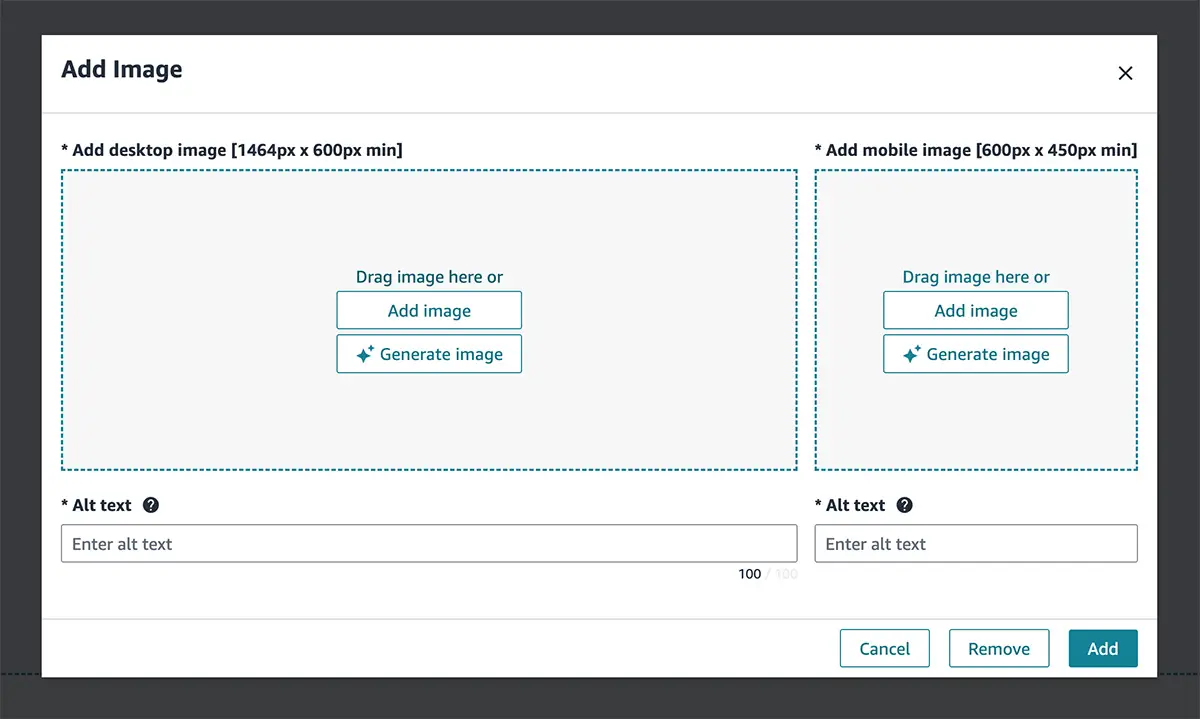
Alt text (labeled "Image Keywords" in Seller Central) has been a widely discussed A+ SEO tactic for years. The idea was to add keyword-rich descriptions to A+ images to expand keyword coverage beyond your title, bullets, and backend terms. The recommended practice was up to 100 characters per image with varied keywords across modules.
Where alt text lives depends on which tier you are using:
Standard A+ Content displays on both desktop and mobile, but it is one design that reflows automatically to fit mobile.
Premium A+ Content also displays on both, but it has a separate mobile-specific version with its own layout that you preview independently. That is why it gives you more images and more alt text fields to work with.
Brand Story also has alt text fields and follows the same approach.
If you are in a US Seller Central account, you likely still see these fields. Fill them in. Use relevant keywords, vary them across images, and stay under 100 characters per image.
One thing worth knowing: Amazon began removing seller-controlled alt text in Europe in 2025 and replaced it with AI-generated descriptions. That rollout has not fully reached the US yet, but the direction is clear. Use the fields while you have them, but do not build your entire keyword strategy around them.
There is also an ongoing debate about whether A+ alt text was ever indexed for organic search to begin with. Amazon has never officially confirmed it. Some sellers have documented ranking improvements they attribute to alt text optimization. Others argue the field was always meant for accessibility only. No definitive answer exists. What is clear is that your primary keyword strategy belongs in your title, bullets, and backend search terms regardless.
What Amazon Actually Indexes Inside A+ Modules
Amazon can crawl live text fields inside A+ modules: headers, subheadings, and paragraph blocks. Brand Story text fields are also crawlable. That text carries some indexing weight, though Amazon has never confirmed exactly how much, and it is significantly lighter than your core listing fields.
Text embedded inside images, including feature callouts, benefit stacks, and infographic copy, is not indexed. Amazon cannot read text inside a JPEG or PNG.
Here is the honest part though: the SEO value of live text modules is marginal and unconfirmed. Plenty of high-performing listings use fully image-based A+ designs with no live text modules at all. If your alt text fields are filled in, your title and bullets are optimized, and your design converts well, you are not leaving meaningful SEO value on the table by going image-based.
A clean, well-designed image layout that keeps shoppers engaged and drives purchases sends a stronger ranking signal than a cluttered text-heavy module that causes people to bounce.
Conversion rate is the mechanism. Design quality is what drives it.
Does A+ Content Help with Google Search?
Yes, to a degree. Amazon product pages are indexed by Google. Any crawlable text in your A+ modules can appear in Google's index, which means your listing can surface in Google results and pull in external traffic.
This matters because Amazon increasingly rewards external traffic signals. Shoppers who arrive from outside Amazon and convert send a stronger ranking signal back into the system than shoppers who find you through Amazon search alone. The Google SEO benefit of A+ text is secondary, but the downstream effect on conversion velocity is real.
How to A/B Test Your A+ Content
One of the most underused tools in Seller Central is Manage Your Experiments, Amazon's built-in split testing feature for brand-registered sellers. You can run controlled tests on your A+ Content, main image, product title, and bullet points to see which version converts better using your own live traffic.
This is how you optimize A+ Content with real data instead of guesswork. Amazon recommends running each experiment for at least four weeks to reach statistical significance. Access it under Brands in your Seller Central main menu.
Premium A+ Content gives you more to test: video versus no video, interactive hotspots versus static modules, carousel layouts versus stacked. The expanded module count is not just a visual upgrade. It is more surface area to find out what actually closes the sale.
What Makes Amazon A+ Content Design Actually Work
Good A+ Content is not about filling every module. It is about building a visual case for why your product is the right choice for that specific shopper at that specific price point.
That looks like:
- A logical visual flow that matches how shoppers scan a page, not how brands want to tell their story
- Lifestyle imagery that shows the product in real context
- Comparison charts that highlight competitive advantages clearly and honestly
- Video in Premium A+ that shows the product doing what you claim it does
- Mobile-optimized layouts, especially for Premium A+ where both desktop and mobile renderings need to be reviewed separately
The listings that convert consistently are not the most elaborate. They are the clearest and the most trustworthy. Amazon's algorithm rewards that, even if it cannot read a single pixel of your design.
The Bottom Line
A+ Content and Premium A+ Content are not ranking shortcuts. They will not save a listing with a weak title, missing backend terms, or the wrong primary keyword. Get those fundamentals right first.
What A+ Content does is convert the traffic those fundamentals earn you. Higher conversion feeds better ranking signals, which earn more visibility, which converts into more sales. That is the loop. A+ Content is one of the strongest levers you have inside it, but only if the design is built to convert rather than just to look finished.
For competitive categories where conversion rate decides whether you land on page one or page two, A+ Content is not optional polish. It is conversion architecture, and it belongs in the strategy from day one.
Frequently Asked Questions
Does A+ Content help with Amazon SEO?
Not directly. A+ Content does not add keyword ranking power the way your title or bullet points do. It helps by improving conversion rate, reducing return rate, and increasing sales velocity, all of which feed positive signals into Amazon's ranking algorithm.
Does Amazon index A+ Content?
Some of it. Live text fields like module headers and paragraph blocks can be crawled. Text inside images cannot. The SEO weight of A+ text is lighter than core listing fields and has never been officially confirmed by Amazon.
Is Premium A+ Content worth it?
If you qualify, yes. Amazon reports up to 20% sales lift with Premium A+ versus 8% with standard A+. The additional modules, video support, and mobile-optimized layouts give you more tools to convert traffic into buyers, which is the real ranking driver.
Can I still add alt text to A+ images?
In the US, yes. The alt text fields (labeled Image Keywords) are still available in most US accounts. Amazon removed seller-controlled alt text in parts of Europe in 2025 and replaced it with AI-generated descriptions. The US rollout of that change is still in progress.
Does A+ Content affect Google rankings?
Your Amazon product page is indexed by Google. Crawlable A+ text can appear in Google's index and drive external traffic to your listing. Amazon rewards that external traffic with stronger ranking signals when those visitors convert.