


Update: Amazon Is Ending Shoppable Collections Beta
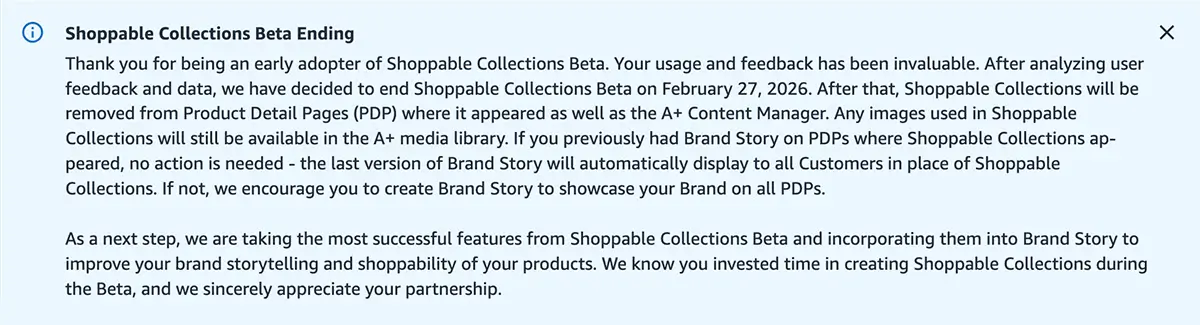
As of February 27, 2026, Amazon has officially ended the Shoppable Collections Beta. The feature will be removed from Product Detail Pages and the A+ Content Manager.
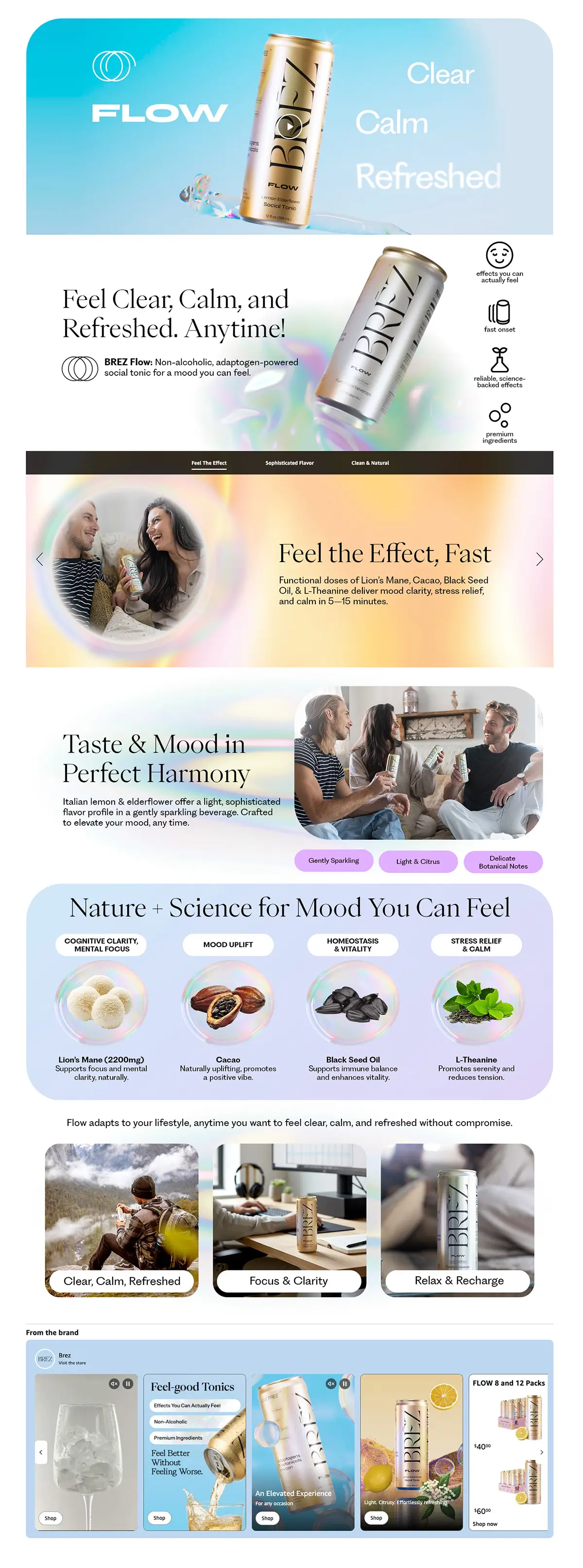
If you previously had Shoppable Collections live on your PDPs, Amazon will automatically revert to your latest Brand Story module. Images used in Shoppable Collections will remain available in your A+ media library.
Amazon has stated that successful elements from Shoppable Collections will be incorporated into Brand Story moving forward.
What this means for sellers:
- Shoppable Collections will no longer appear on PDPs
- Brand Story will serve as the primary merchandising module
- No manual action is required if Brand Story was already live
- Sellers without Brand Story should create one immediately
The shift signals Amazon’s continued focus on streamlined, brand-driven storytelling within PDPs.
What Are Amazon A+ Shoppable Collections?
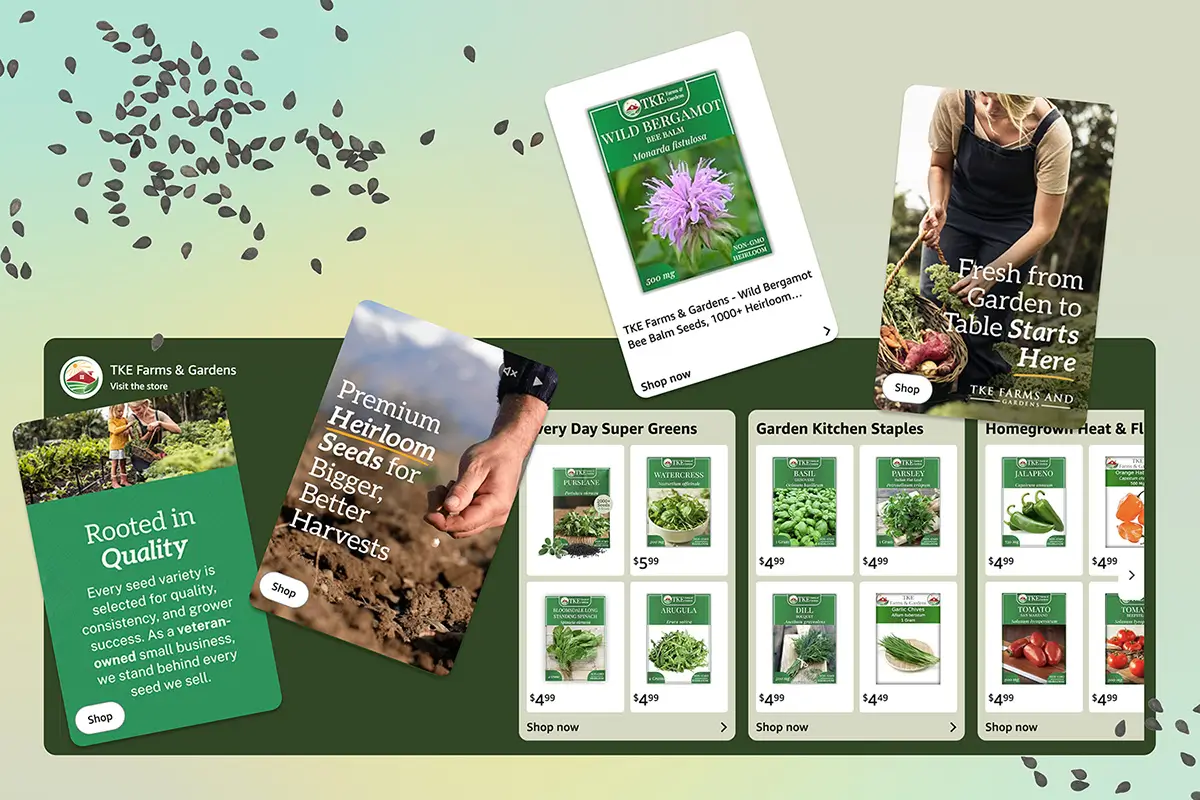
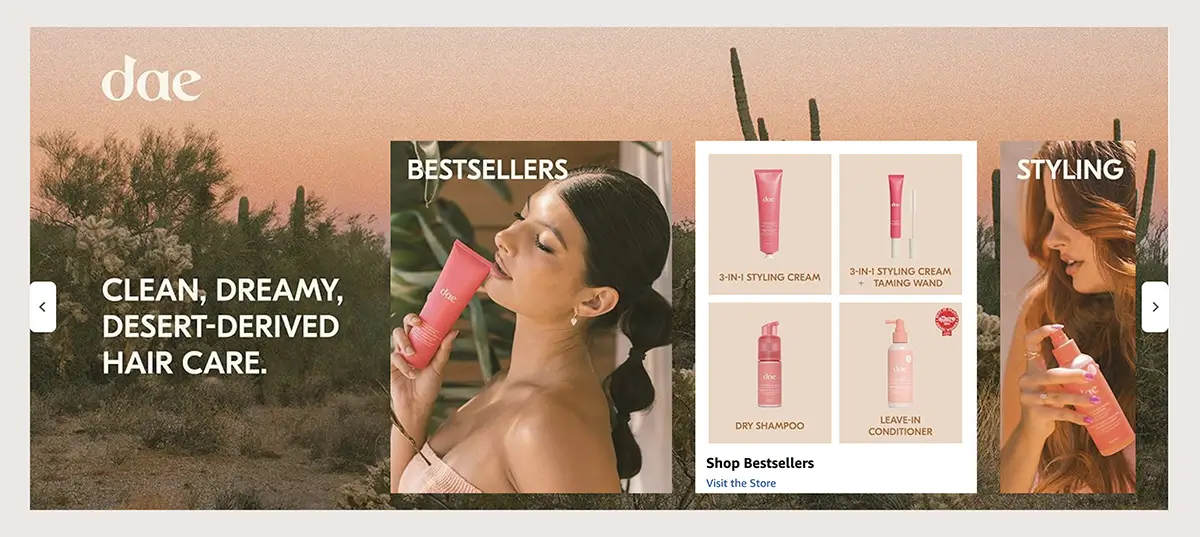
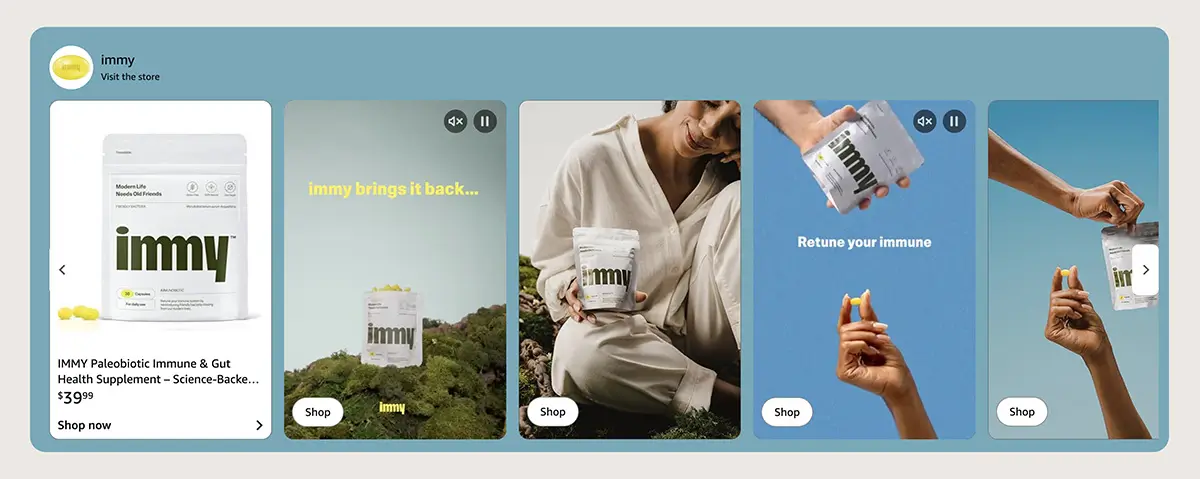
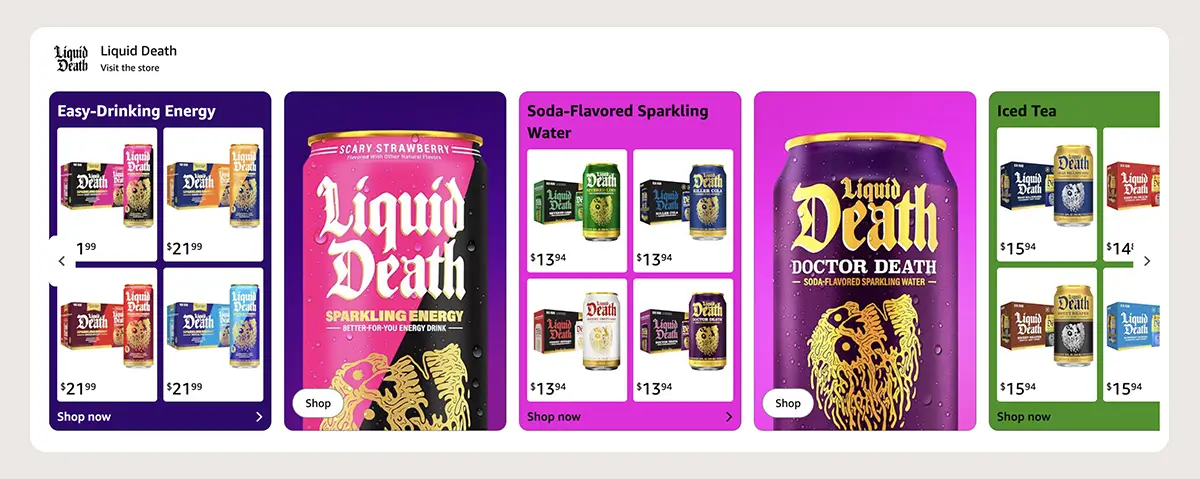
Shoppable Collections is Amazon's latest enhancement to the A+ Content Manager, allowing registered brand owners to create interactive product showcases that replace the traditional Brand Story section. Unlike the standard option that focuses on visual storytelling, this module prioritizes conversion by enabling customers to discover and purchase related products without leaving your product page.

The feature works by letting you curate themed product collections, tag items in images and videos, and drive traffic directly to your Amazon Storefront. Each element is designed to keep customers engaged with your brand catalog while simplifying the path to purchase.
Amazon Brand Story vs. Amazon a+ Shoppable Collections
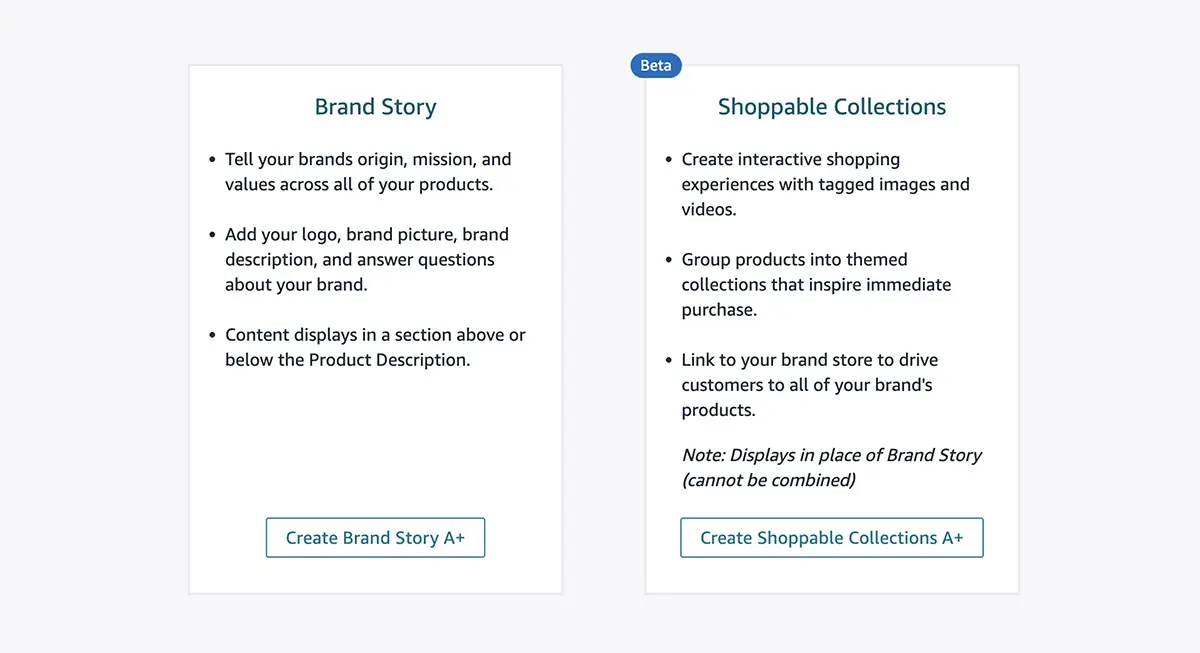
You cannot display both a Brand Story and Shoppable Collections simultaneously. When you implement Shoppable Collections, it completely replaces your Brand Story section.
This means sellers need to make a strategic choice:
- Brand Story = Better for brand awareness and storytelling
- Shoppable Collections = Better for maximizing sales and cross-merchandising
Choose based on your primary business objective.
Amazon A+ Content Shoppable Collections Requirements
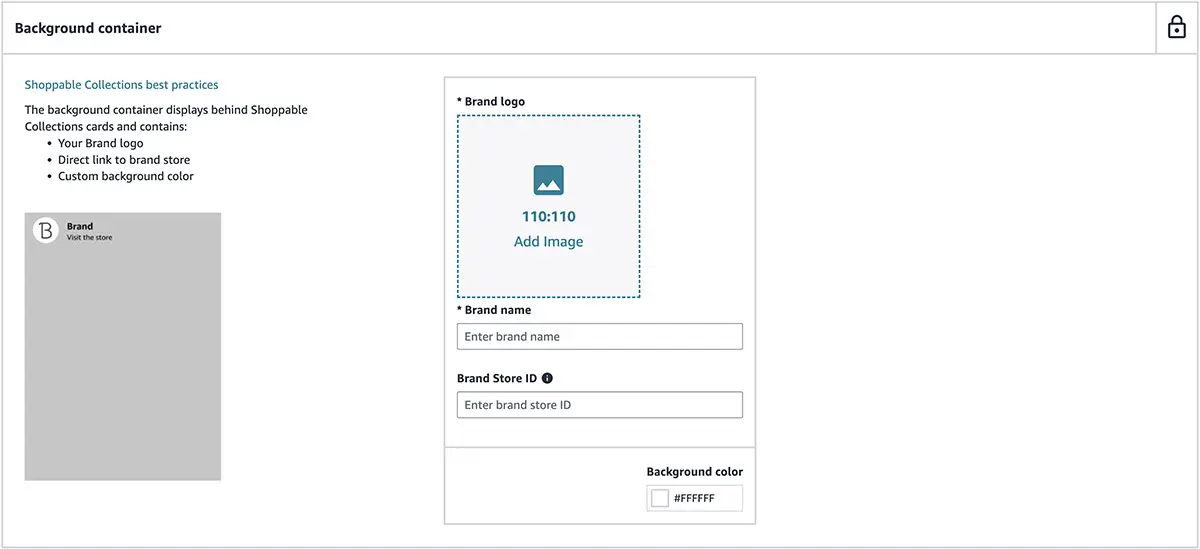
Amazon has specific requirements to ensure Shoppable Collections maintain a high-quality customer experience. Every collection requires a background container that includes:
- Your brand logo (110px x 110px)
- Brand name
- Brand Store ID
- Custom background color that aligns with your brand identity
The most critical requirement: you must have at least 5 collection cards with content for the section to display on your product detail page. If you create fewer than 5 cards, Amazon will hide the entire Shoppable Collections section from customers. This minimum ensures the feature delivers value rather than appearing sparse or incomplete.
You can add up to 10 cards, giving you flexibility to showcase different aspects of your catalog. Each card serves a specific merchandising purpose, from highlighting bestsellers to featuring seasonal promotions.
6 Amazon A+ Shoppable Collection Card Types
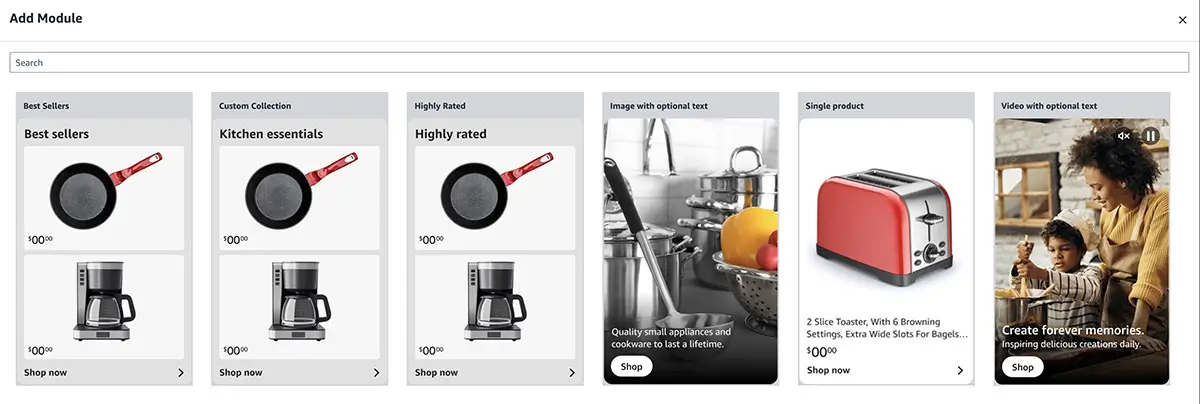
Amazon provides six distinct card options, each designed for specific merchandising strategies.
Best Sellers
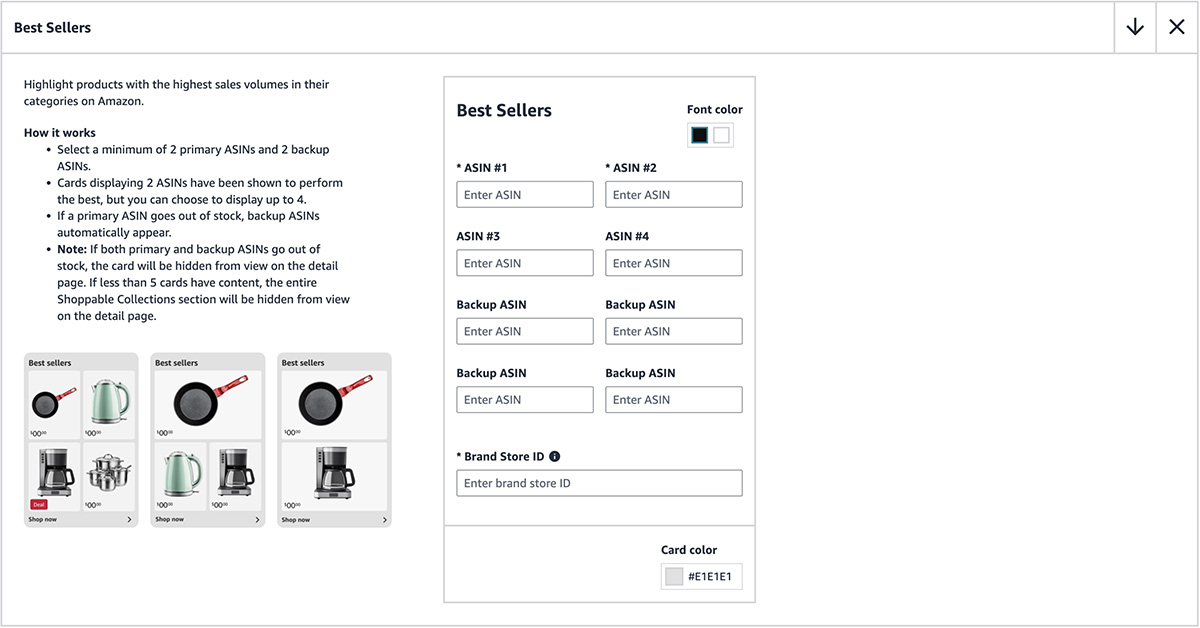
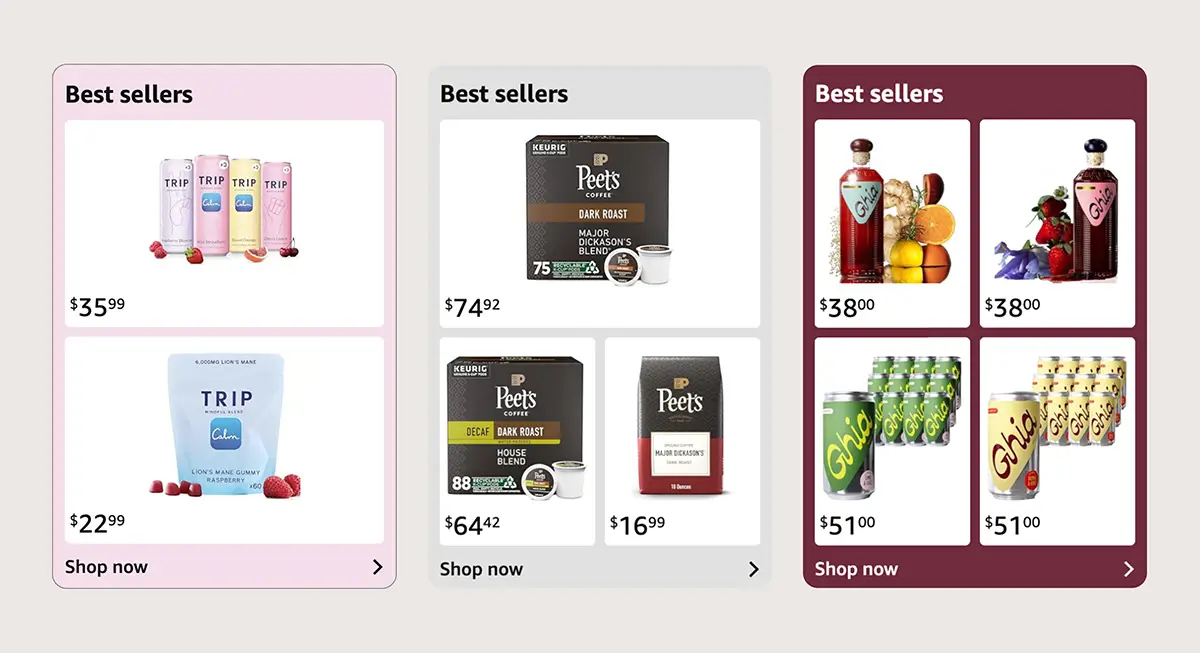
This card showcases your 2–4 top-selling products under a “Best Sellers” headline and can only be added once per collection.
Requirements and features include:
- Minimum of 2 primary ASINs, up to 4 ASINs shown on card.
- Up to 4 backup ASINs which automatically display if a primary product goes out of stock
- Selectable font color: black or white
- Custom card background color
- Direct link to your Brand Store
Highly Rated
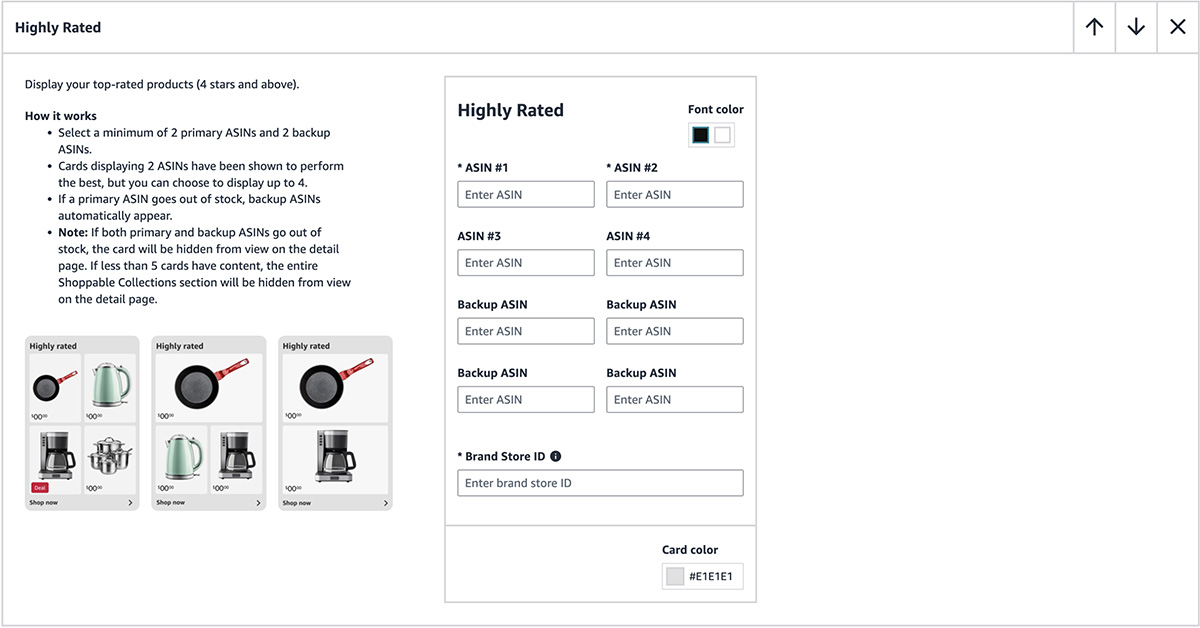
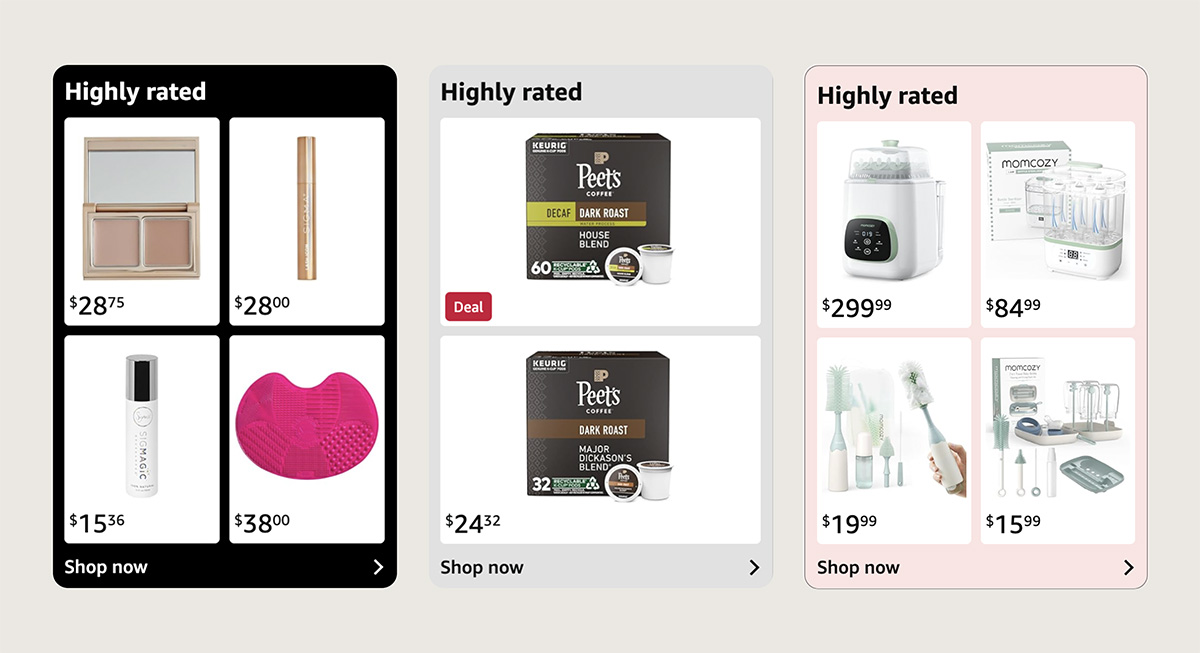
Similar in structure to the Best Sellers card, this option highlights your highest-rated products and is also limited to one use per collection. It follows the same ASIN requirements and customization options as the Best Sellers card. It helps build trust by showcasing products with strong customer validation. You cannot change the card headline.
Custom Collection
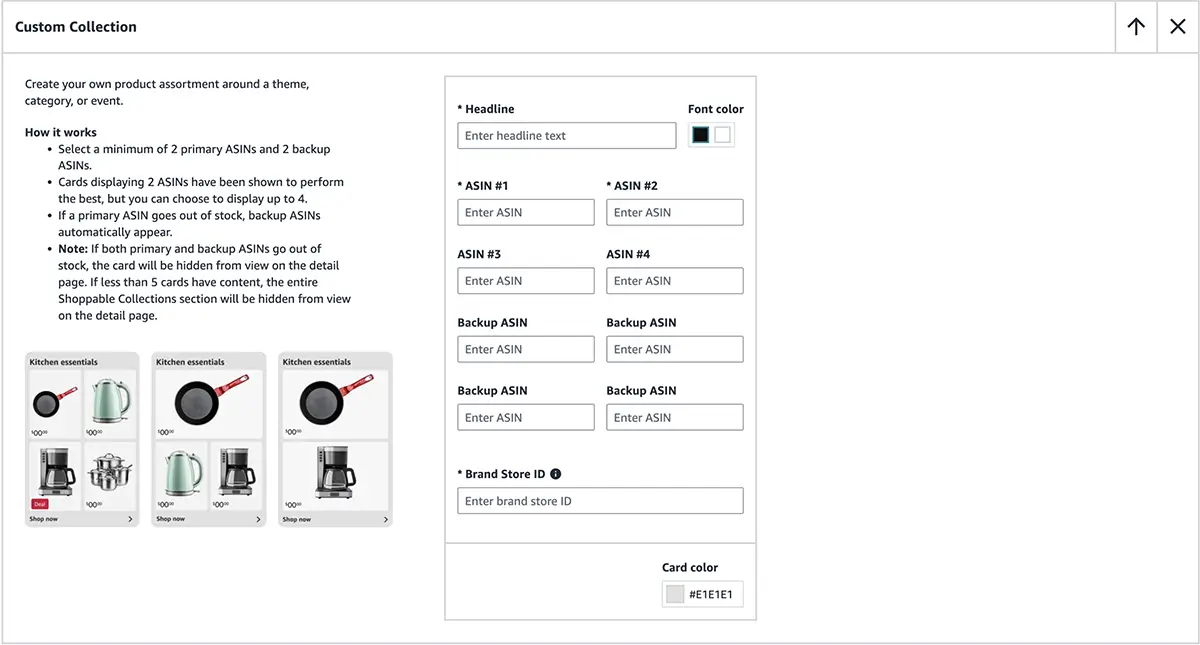
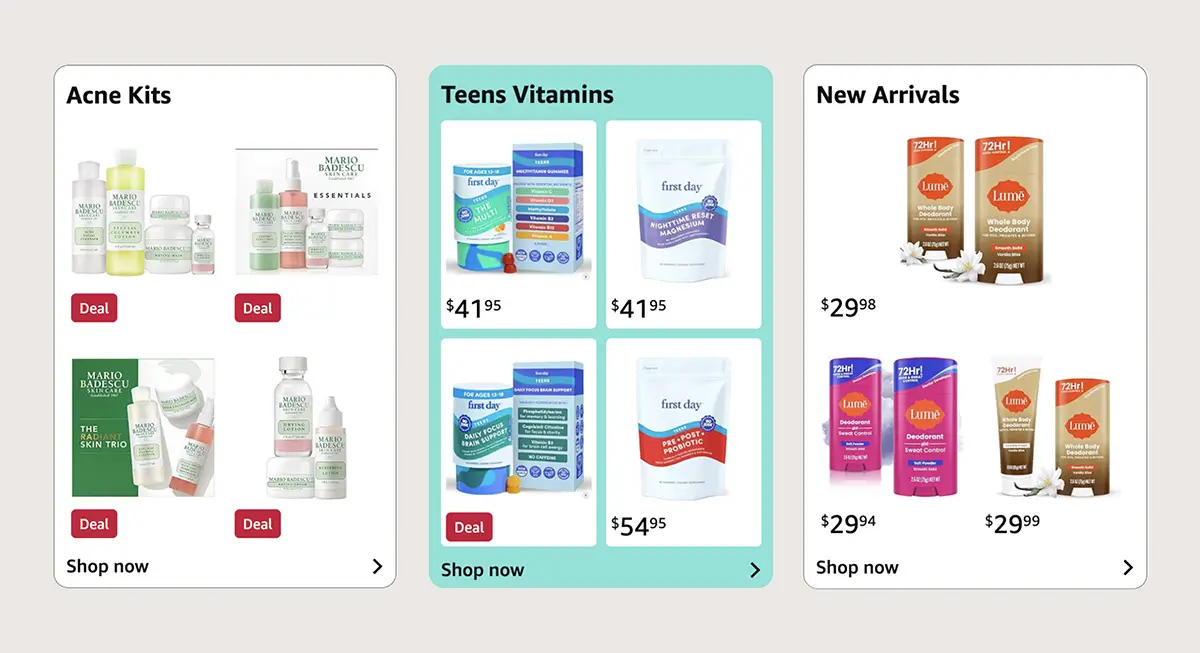
The Custom Collection card lets you create themed product groupings around seasonal promotions, new releases, or specific product categories with a custom headline that guides customers toward related purchases.
Requirements and features include:
- Up to 3 cards per Shoppable Collections
- Custom headline, 50 character limit
- 2–4 primary ASINs required
- Up to 4 backup ASINs, which display automatically if a primary product goes out of stock
- Selectable font color: black or white
- Custom card background color
- Direct link to your Brand Store
Single Product Card
The Single Product card showcases one featured item without a background color, making it perfect for drawing attention to new launches, top sellers, or seasonal highlights.
Requirements and features include:
- Up to 3 cards per collection
- 1 primary ASIN required
- 2 backup ASINs required, which display automatically if the primary product goes out of stock
- No background color for a clean, focused presentation
This format keeps the attention exactly where you want it, on the featured product.
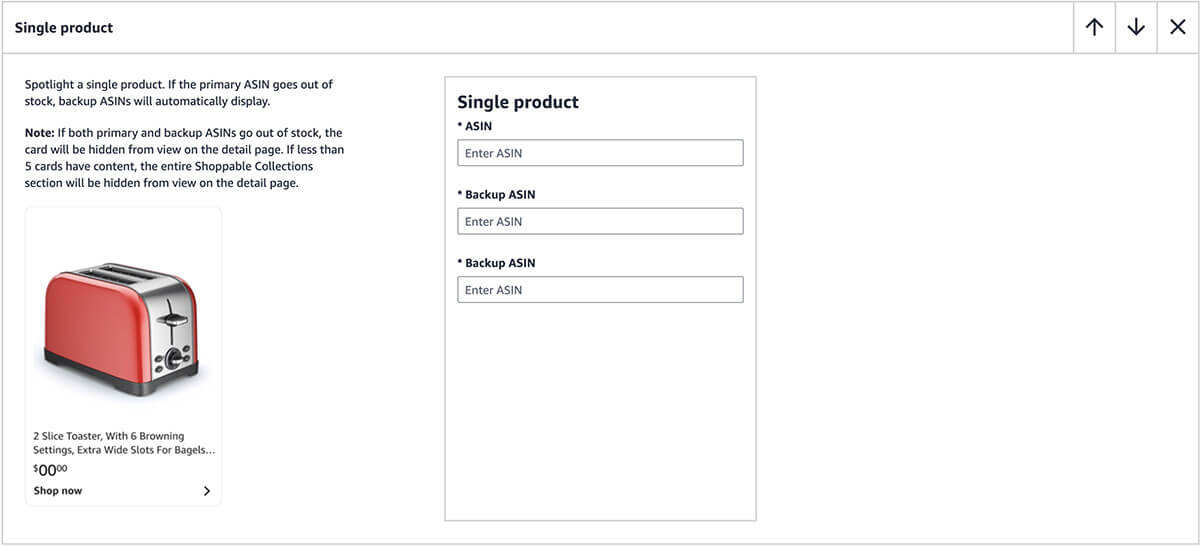
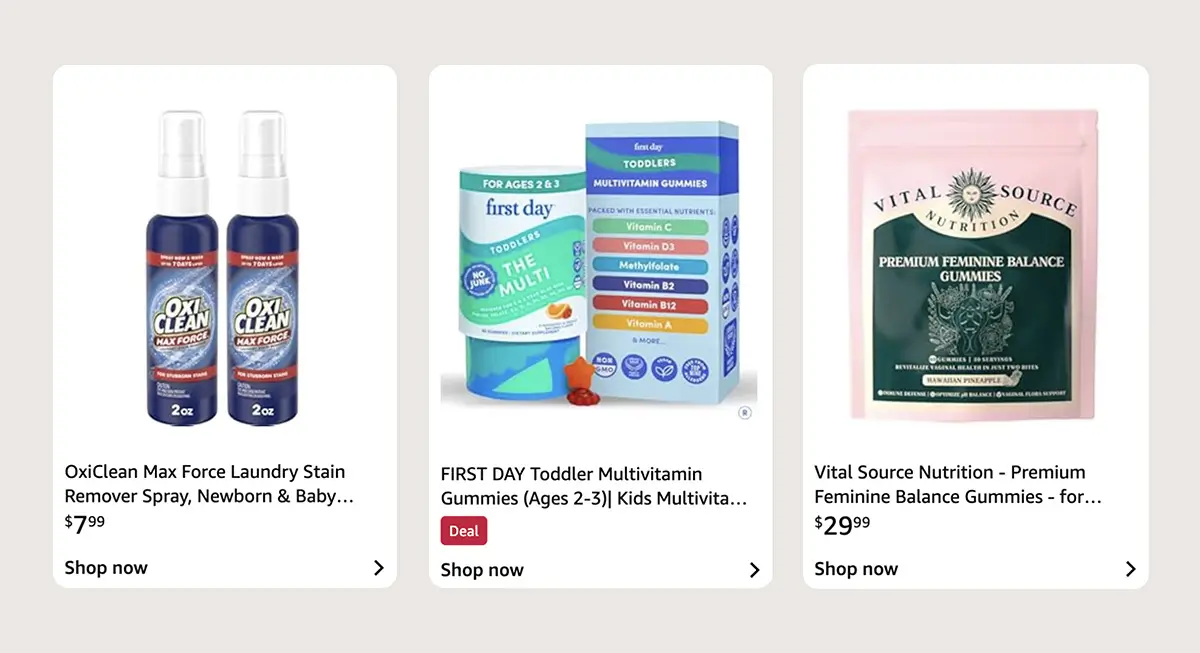
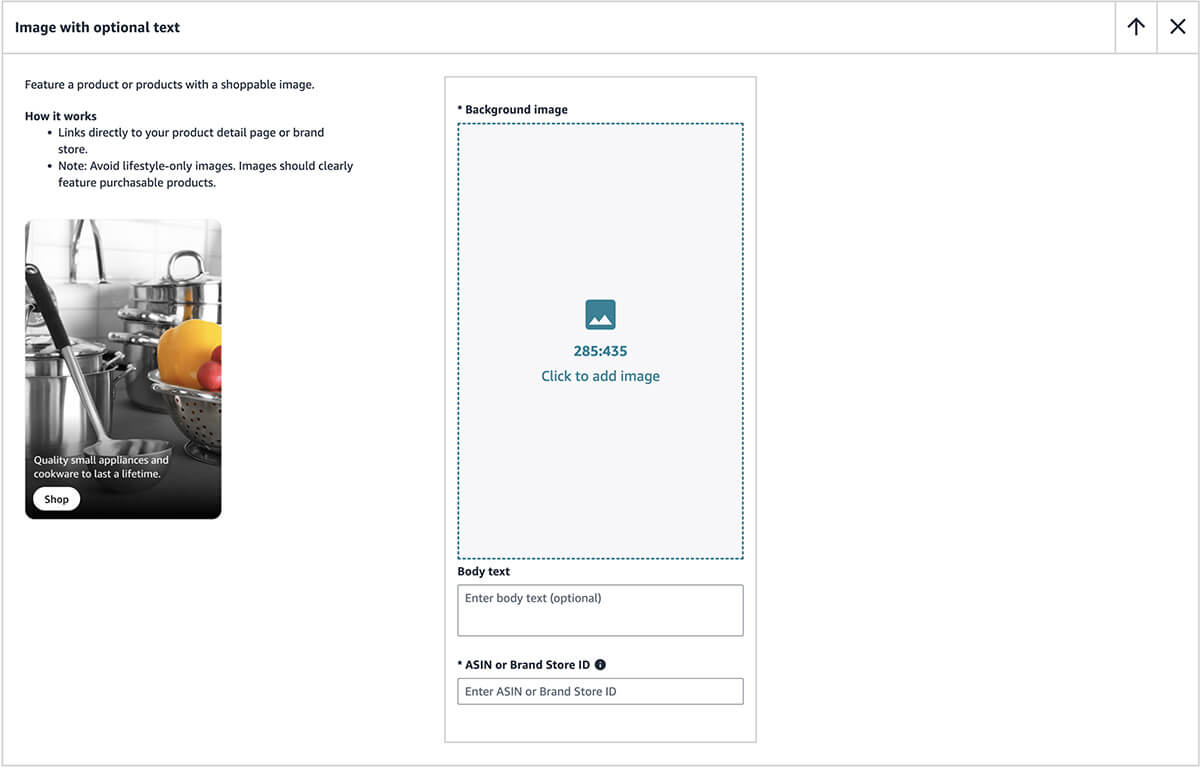
Image with Optional Text Card
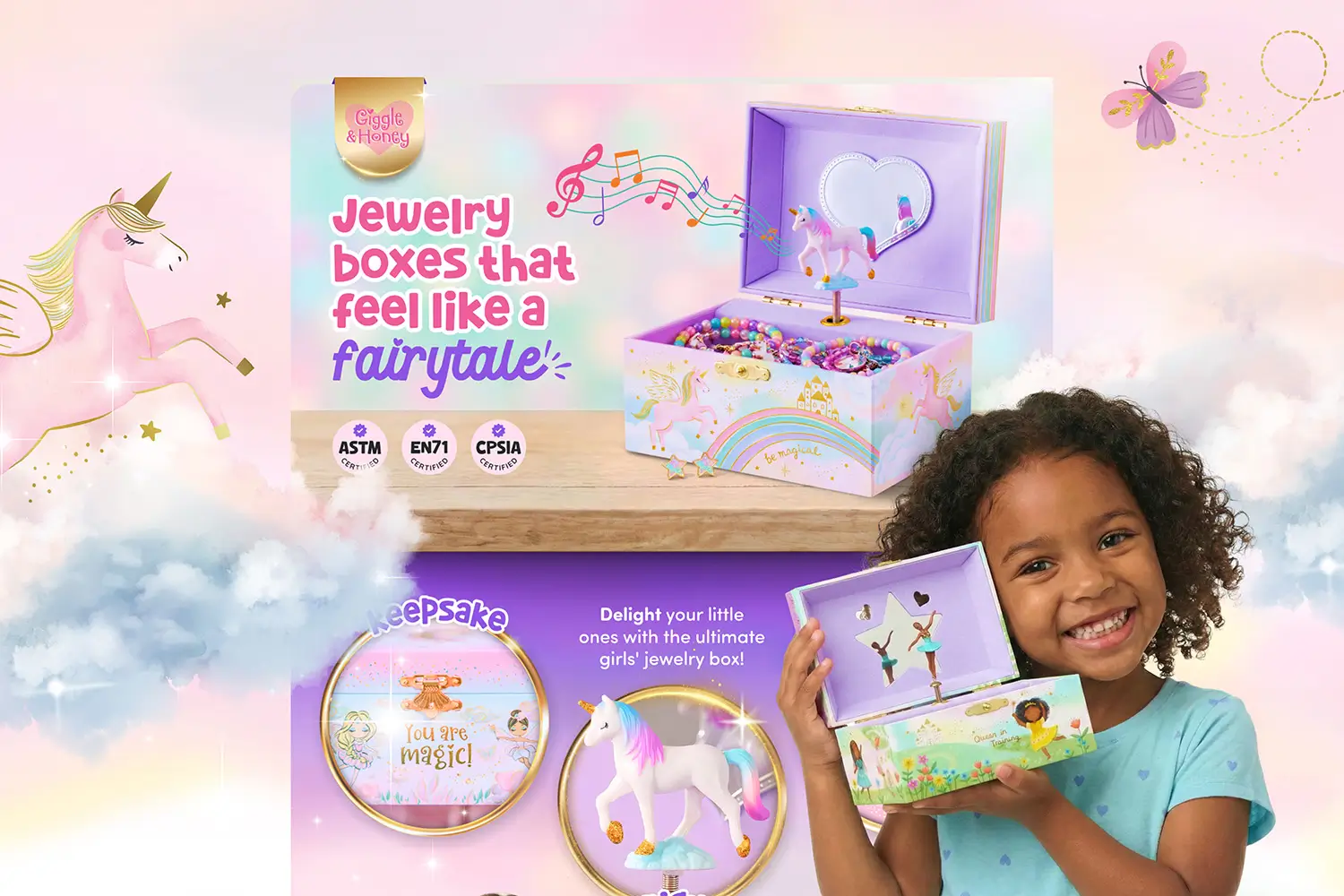
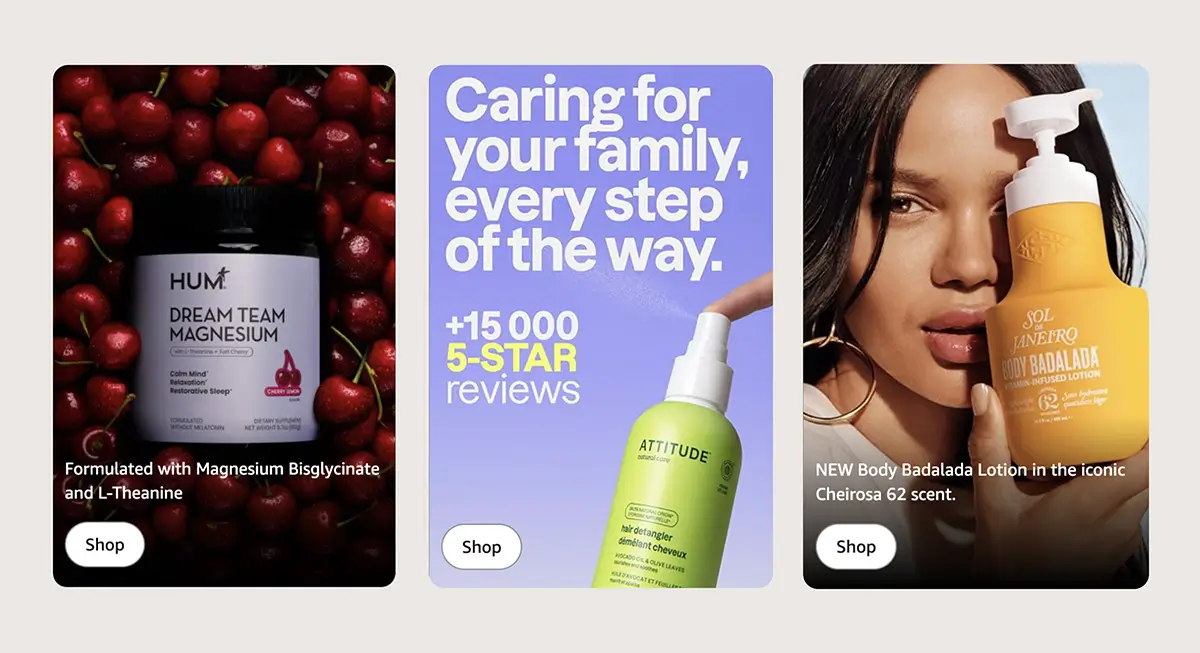
This card displays shoppable images that link directly to a product detail page or your storefront, making it ideal for visually driven merchandising and creating an immersive brand experience. Get creative and use lifestyle imagery, add text within the images, or both!
Requirements and features include:
- Image size: 285px x 435px
- Links to a product detail page or your Storefront
- Up to 3 cards per collection
- Optional body text with a 57 character limit
- Ideal for lifestyle imagery that shows products in use
These cards are great if you want to bring back some of the storytelling you lose when you do not use the regular Brand Story option.
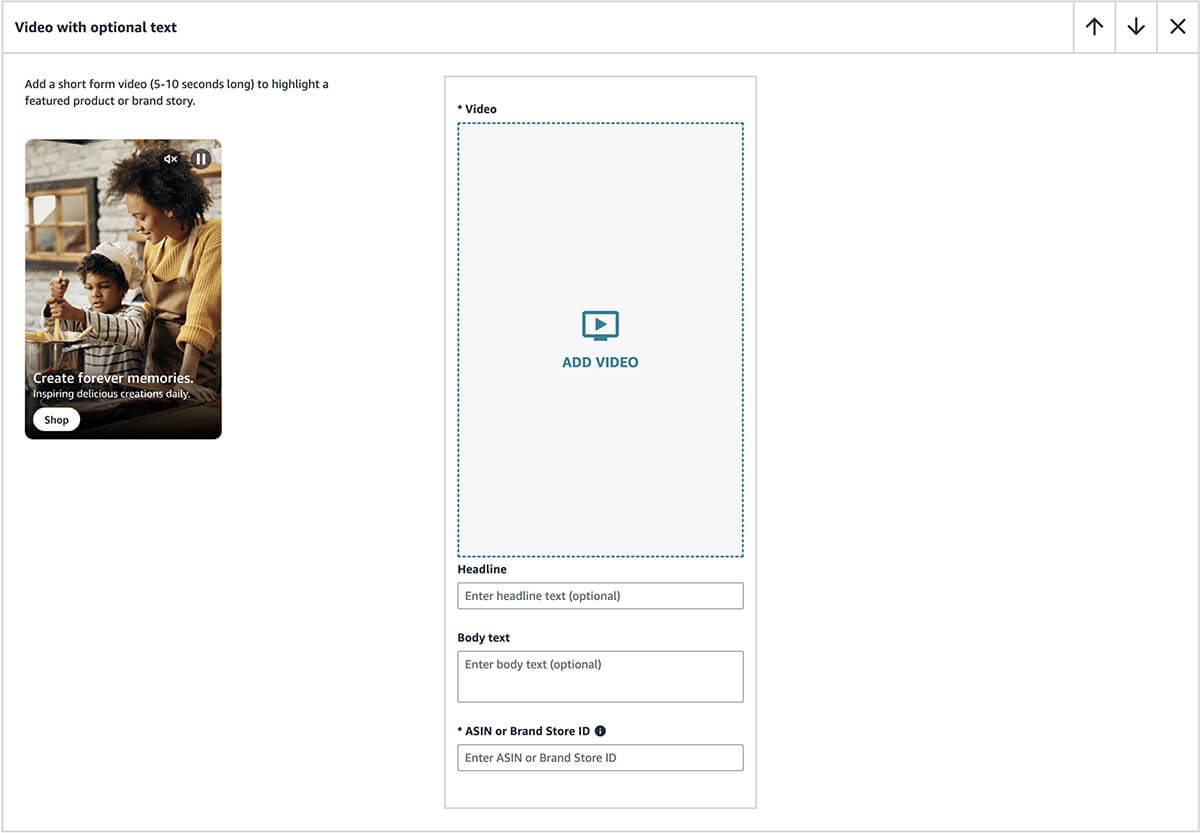
Video with Optional Text Card
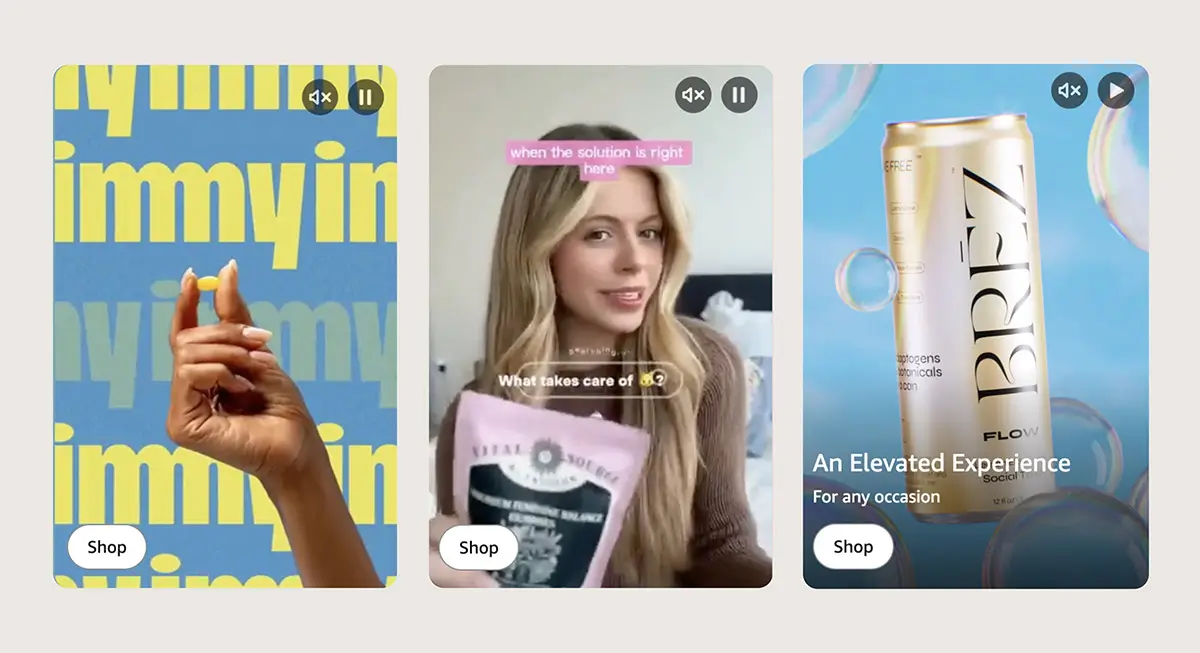
Perhaps the most engaging option, this card features short-form videos which start playing the moment customers scroll by.
While the interface suggests a 5-10 second limit, I found you can currently upload longer clips if they are under 200MB, though this could change. Each video plays once before seamlessly switching to a static image, making it perfect for spotlighting product features, capturing motion, or sparking an emotional response.
Requirements and features include:
- Format: MP4 with a 200mb size limit
- Minimum resolution: 856 x 1306
- Matching preview image required
- Video title, 50 character limit
- Video description, 200 character limit
- Optional overlay headline, 26 character limit
- Optional overlay body text, 36 character limit
- Up to 3 video cards per collection
Strategic Benefits for Amazon Brand Registry Sellers
Implementing Shoppable Collections delivers measurable advantages that directly impact your bottom line:
Increased Cross-Merchandising Opportunities
Instead of customers viewing a single product and leaving, they're exposed to more of your catalog through curated collections that guide them toward complementary purchases.
Higher Average Order Values
When customers discover multiple relevant products in one location, they're more likely to add several items to their cart rather than making single-item purchases. Beta testing brands are reporting noticeable conversion improvements, with some seeing increases in both conversion rate and total revenue per visitor.
Built-in Inventory Management
The product card options offer smart backup systems. By requiring backup ASINs, Amazon ensures your collections remain fully populated even when specific products sell out. This prevents the poor customer experience of empty or broken collection cards, which maintains engagement throughout inventory fluctuations.
Direct Storefront Traffic
Every card includes direct links to your Brand Storefront, creating multiple entry points for customers to explore beyond your product listings. This increased storefront traffic expands brand discovery and creates opportunities for customers to find products they might not have searched for directly.
Creating High-Converting Shoppable Collections on Amazon
Success with this feature requires intentional design strategy. Start by analyzing your product catalog to identify natural groupings. Look for complementary products frequently purchased together, items that solve related problems, or products that represent a complete solution.
Amazon Product Listing Images and Visual Quality Standards
Visual quality matters significantly. Since you're competing for attention within an already crowded product page, your images and videos must be polished and professional. Use high-resolution photography, consistent styling that aligns with your brand, and clear product tagging that makes items immediately identifiable and clickable.
Consider your customer's shopping journey when selecting products for each module. Lead with your strongest performers in the Best Sellers or Highly Rated modules to establish credibility, then use Custom Collections to introduce newer products or specialized offerings. The goal is creating a logical flow that feels helpful rather than overwhelming.
Seasonal and promotional timing can significantly impact collection performance. Update your Custom Collection headlines and featured products to align with shopping seasons, holidays, or promotional events. "Summer Essentials" becomes "Back to School Must-Haves" becomes "Holiday Gift Ideas," keeping your content relevant and timely.
Amazon Shoppable Collection FAQs for Brand Registry Sellers
Can I Use Both Brand Story and Shoppable Collections?
No, these features are mutually exclusive. Implementing Shoppable Collections removes your Brand Story section entirely. Choose based on whether brand narrative or direct conversion is your priority.
Do Shoappable Collections Count Towards Amazon Premium A+ Access?
No, Shoppable Collections don't count toward Amazon Premium A+ access requirements.
If you’re looking to qualify faster, you can follow the steps outlined in this guide on how to get Premium A+ access more quickly.
What Happens If I Don't Have 5 Cards?
Amazon will hide the entire Shoppable Collections section from customer view. There's no partial display option, so make sure you meet the minimum requirement before publishing.
How Do Backup ASINs Work?
When your primary ASIN goes out of stock or experiences a suppression issue, the designated backup ASIN automatically displays in that position. This happens dynamically without requiring manual updates.
Can I Link to Specific Storefront Pages?
Yes, every card requiring a Brand Store ID accepts the identifier from your homepage or any subpage. This lets you direct customers to relevant category pages or promotional destinations.

How Often Should I Update My Collections?
Best practice suggests reviewing monthly at minimum, with more frequent updates during peak shopping seasons. Keep collections fresh with new products, updated messaging for promotions, and seasonal relevance.
Integration with Premium A+ Content and Your Broader Amazon Strategy
Shoppable Collections work best as part of a comprehensive Amazon content approach. They complement your A+ Content by adding interactivity to the educational storytelling those modules provide. While A+ Content explains product benefits and builds brand trust, Shoppable Collections convert that interest into additional purchases.
Well-designed product pages with clear paths to related products can increase conversion rates by up to 30%. Shoppable Collections provide exactly this type of intuitive product discovery.
Your Amazon Storefront serves as the destination for collection traffic as well. Ensure your storefront design is current, well-organized, and provides clear paths to purchase. Shoppable Collections drive qualified traffic to your storefront, but the storefront must convert that traffic into sales.
Maximizing Amazon A+ Content Performance Through Testing
Like any marketing feature, optimization comes from testing and refinement. Start by varying which products appear in different card positions. Track which combinations drive the highest click-through and conversion rates, then double down on winning strategies.
Monitor your Amazon Business Reports to track traffic sources and sales attribution. Look for patterns in which products customers view after engaging with your Shoppable Collections, and use this data to inform future card selections.
Video cards typically generate higher engagement than static images, but require more production resources. Test whether the increased performance justifies the additional investment for your specific product category and customer base.
Moving Forward with Amazon A+ Shoppable Collections
Amazon Shoppable Collections aren’t just another feature. They’re Amazon quietly turning product pages into mini storefronts. Brands that move early get the edge while others are still relying on static content.
The real advantage comes from treating collections like living merchandising tools. Rotate products. Test pairings. Watch performance. The sellers who refine and optimize will outperform the ones who set it once and forget it.
If you manage a large catalog, this is where it gets powerful. Featuring complementary products directly on your detail pages creates serious basket-building potential. One click leads to another, and suddenly your PDP is doing a lot more selling.
Just remember, this only works if the visuals hold up. Professional product images and short-form videos are not optional here. If you need high-quality product assets fast, try Soona. And if you’re ready for the design phase and want everything strategically built to convert, reach out. I’m here to help.